
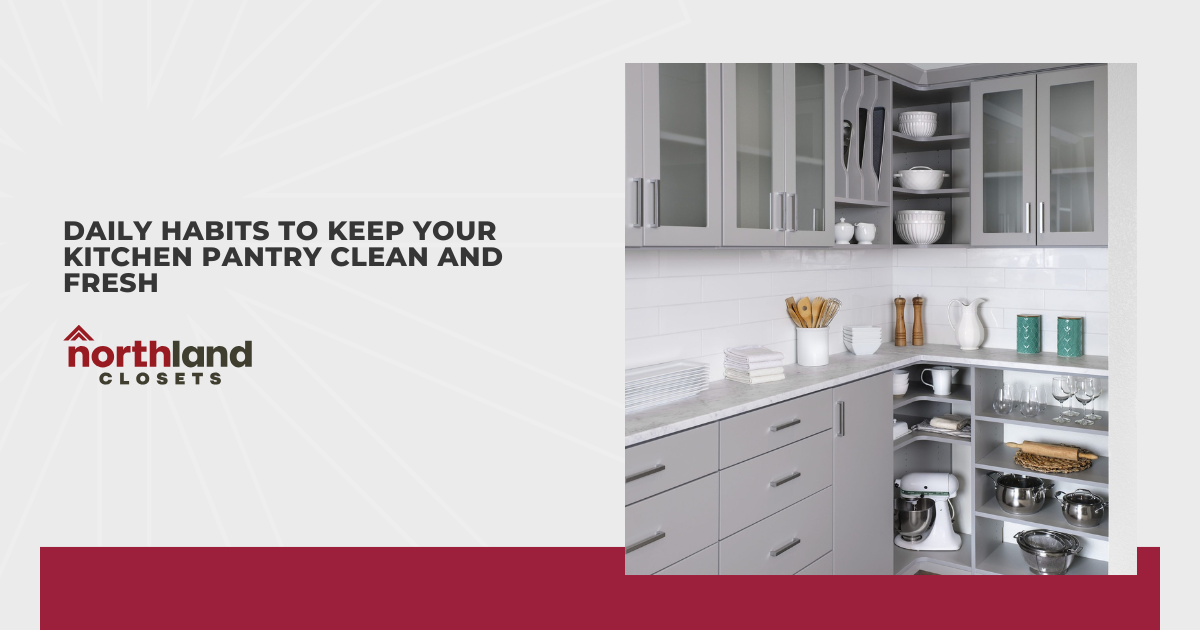
Organizing a pantry can become frustrating when small spills, crumbs, and forgotten items keep making the space feel cluttered no matter how often you clean it. This is also easy for odors, stale food, and clutter to build up when care only happens during a big cleanout. Regular upkeep helps you catch these issues while they’re still quick to handle. I like helping homeowners build kitchen pantry habits that feel realistic enough to keep up with, even on busy days.
Daily habits to keep your pantry clean and fresh are really about staying ahead of mess, moisture, and wasted items. When proper maintenance becomes part of how you use the kitchen, the storage space stays more sanitary and dependable between deeper cleanings. A clean pantry also makes it easier to see what you have, store food safely, and keep everyday cooking from feeling more complicated than it needs to be.
To ensure that your kitchen pantry looks neat and orderly every time you open it, these are the habits worth making part of your daily kitchen rhythm:
- Wipe as you go
- Do a nightly reset
- Check for expired or stale items
- Store food in airtight containers
- Practice fifo (first in, first out)
- Keep a trash/recycling spot handy
- Sweep or vacuum the floor
- Conduct a quick sniff/visual check
Stick with me through each one, and you'll have a kitchen pantry that stays fresh without much extra effort.
Wipe As You Go
Small spills and crumbs can make your pantry feel dirty faster than expected, especially when they’re left to dry or spread across shelves. Wiping as you go keeps those little messes from becoming sticky buildup, stale odors, or harder cleanup later. For a pantry, this habit matters because food storage areas should stay clean enough to use without hesitation.
Keep a cloth, paper towel, or small cleaning wipe nearby so quick cleanup doesn’t feel like a separate task. I always recommend handling pantry spills the same way you’d handle counter spills because both affect how clean the kitchen feels. Mild soap and warm water are usually enough for everyday messes unless something oily or sticky needs extra attention.
Shelf liners can also make wiping easier because they protect the surface underneath and can be removed when needed. Quick cleanup keeps shelves fresher and helps prevent crumbs from getting pushed behind cans, boxes, or containers. When wiping becomes part of using the kitchen pantry, the whole space stays easier to maintain.
Do A Nightly Reset
Pantry clutter often builds up at the end of the day when snacks, ingredients, and opened packages don’t make it back to their proper spots. A nightly reset gives you a quick chance to close bags, straighten shelves, and clear anything that doesn’t belong. This keeps your pantry from starting the next day already messy.
Focus on the areas you touched most during the day instead of trying to reorganize everything. Put breakfast items, snacks, baking supplies, or dinner ingredients back where they belong, then check for anything left open. I like this habit because it’s short enough to repeat, even when the kitchen has been busy.
Five minutes is usually enough when the reset happens regularly. Longer cleanups become less necessary when small messes don’t have time to settle in. Your pantry stays more dependable when each day ends with the space ready for tomorrow.
Check For Expired or Stale Items
Expired or stale food can take up valuable space and make a pantry harder to trust. Older packages often hide behind newer groceries, which can lead to waste, odors, or ingredients that aren’t fresh when you need them. I’ve seen how much cleaner a kitchen pantry feels once food that no longer belongs there is removed.
Check dates on items you don’t use often, especially opened goods, baking ingredients, snacks, grains, and pantry staples. Smell and texture can also tell you when something has gone stale, even if the date hasn’t passed yet. Anything questionable should be tossed instead of returned to the shelf.
Regular freshness checks also make grocery shopping easier because you can see what you actually have. You’re less likely to buy duplicates or keep food that’s taking up space for no reason. This habit supports a cleaner, safer pantry without requiring a full cleanout every time.
Store Food In Airtight Containers
Open packaging can let food go stale faster, spill more easily, and attract pests if it isn’t sealed well. Airtight containers help protect dry goods while making shelves look cleaner and easier to manage. In a kitchen pantry, better storage can make a noticeable difference in both freshness and daily use.
Clear containers are useful because you can see what’s inside without opening each one. Labels help prevent confusion, especially for similar-looking items like flour, sugar, rice, oats, or pasta. I usually tell homeowners to choose containers based on shelf fit first, not just appearance.
Stackable shapes can save space, but only if they’re easy to lift, refill, and clean. Containers that are too tall, too narrow, or hard to open often become frustrating over time. Good pantry storage should make food easier to reach and easier to keep fresh.
Practice FIFO (First In, First Out)
FIFO means first in, first out, and it helps you use older food before opening newer items. Pantry waste often happens when recent groceries get placed in front while older packages sit forgotten in the back. This simple rotation keeps your pantry more organized and helps prevent expired food from piling up.
Place newer items behind older ones whenever you unload groceries. Keep duplicates together so it’s easier to see which package should be used first. I like this step because it works quietly once the habit is in place and doesn’t require a complicated system.
Use this approach for canned goods, snacks, pasta, grains, condiments, and backup items. Older items should be the easiest to reach so they naturally get used sooner. Over time, this habit helps you waste less food and keep the pantry easier to manage.
Keep A Trash/Recycling Spot Handy
Empty packaging, expired food, and loose wrappers can quickly make a pantry feel cluttered. If there isn’t an easy place to toss or recycle things, those items often sit on shelves longer than they should. A nearby disposal spot helps a kitchen pantry stay cleaner during everyday use.
Choose a small bin, paper bag, or nearby cabinet space that fits your kitchen layout. Use it for cardboard, plastic wrap, empty boxes, and packaging you remove while resetting shelves. I’ve found that cleanup habits are easier to maintain when the next step is already within reach.
This doesn’t have to be a large setup or a separate station. Convenience matters more than size because the goal is to remove waste right away. When disposal is simple, pantry clutter has fewer chances to build up.
Sweep or Vacuum The Floor
Crumbs and dust often collect on pantry floors before anyone notices them. Food particles can settle under lower shelves, along corners, or near the doorway, where they can attract pests and make the space feel less sanitary. A clean floor helps a kitchen pantry feel fresh from top to bottom.
Use a broom, handheld vacuum, or slim attachment to reach tight spots. I consider the floor part of pantry maintenance because clean shelves don’t help much if crumbs are sitting underneath them. Quick passes work best when they’re done regularly instead of waiting for a visible mess.
Pay extra attention after unloading groceries or cooking with dry goods. Small bits of packaging, flour, rice, or crumbs can fall without being obvious right away. Keeping the floor clean supports the whole pantry, not just the areas at eye level.
Conduct A Quick Sniff/Visual Check
Odors, moisture, damaged packaging, or unusual crumbs can be early signs that something in the pantry needs attention. A quick sniff and visual check helps you catch problems before they spread or become harder to fix. This is especially useful in a kitchen pantry because food, packaging, and storage conditions can change quickly.
Look for swollen packages, sticky spots, damp areas, stale smells, or anything that seems out of place. I tell homeowners to trust small warning signs because pantries usually show signs of trouble before the problem becomes obvious. Quick checks can happen while grabbing ingredients or putting groceries away.
Quick sniff and visual checks don’t need to feel like an inspection. They’re just a fast way to stay aware of what’s happening in the space. When the pantry smells clean and looks orderly, it feels much better to use every day.
Conclusion
A well-kept kitchen pantry comes down to consistency, not one big overhaul. These small daily habits work together to keep food fresher, cut down on waste, and remove the guesswork from cooking and grocery shopping. I've seen the difference up close: a pantry that gets a little attention each day never spirals into chaos, and the payoff shows up in saved time, money, and one less thing to worry about. Stick with these habits long enough and your pantry simply starts working the way it should.
